Consolidating your HR stack: a practical guide
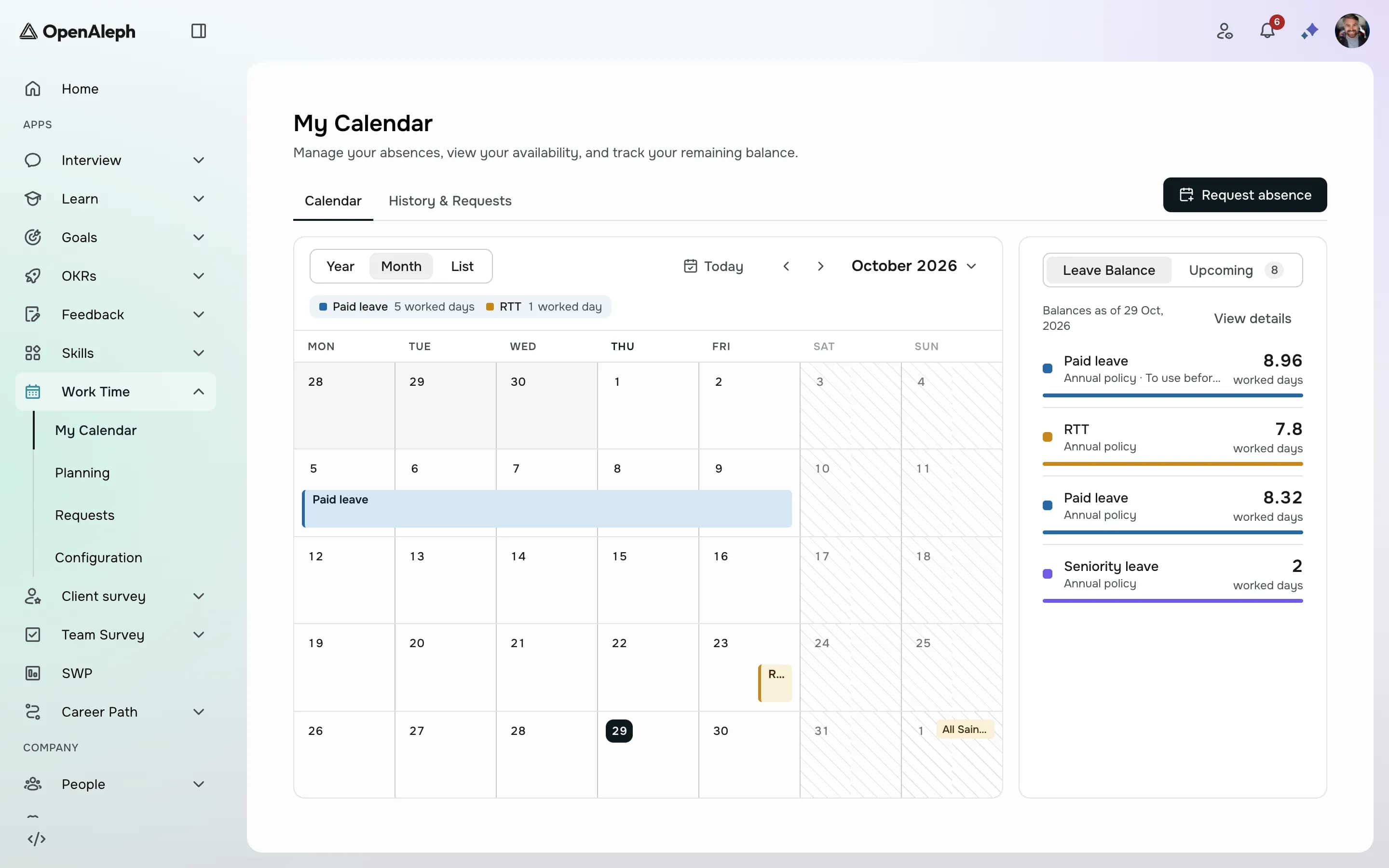
Every HR leader knows the feeling: another renewal email, another per-seat invoice, another tool the team half-uses. Consolidating onto a single platform is the obvious answer — but the migration is what stops most teams. Here's how to approach it without a big-bang rollout.
Start with the shared profile
The foundation of consolidation is a single source of truth for employee data. Get your records, roles and reporting lines into one place first, from an Excel import or a sync with your HRIS. Everything else — reviews, surveys, learning — builds on that profile, so it only has to be set up once.
Adopt modules in priority order
You don't have to switch everything at once. Lead with the product that solves your most urgent problem, prove the value, then add modules. Because they share the same profile, each addition is additive rather than another integration project.
- Map which point tools each platform module replaces.
- Sequence the rollout by urgency, not by vendor contract dates.
- Run one module end-to-end before expanding.
- Retire the replaced tool only once the new one is adopted.
The payoff is two-sided: one contract instead of many, and most teams reduce their total spend; one platform instead of five, and nobody has to keep several tools in sync any more.
Products in this article
See OpenAleph for yourself
Book a walkthrough built around your team.
More articles
- EngagementFrom answers to actions: running an engagement surveyAn engagement survey is easy to send and hard to use. Anonymity, questions, results and the next round: how to run one people trust and HR can act on.
- GoalsOKR or individual goals: which one, and whenBoth are called objectives, and companies often run one when they need the other. What OKR and individual goals are each for, and how to write key results that measure.
- SkillsHow to build a skills matrix from a competency frameworkA skills matrix usually starts as a spreadsheet and stops being true the day a job changes. Here's how to build one from a framework, review cycles and a talent matrix.