What is an AI-powered talent platform?
Most HR teams don't run on one system — they run on five. A core HR tool for records, a performance tool for reviews, a survey tool for engagement, a separate LMS for learning, and a spreadsheet to hold it all together. Each was bought to solve a real problem, and each created a new one: the data never meets.
The cost of a fragmented stack
When your tools don't share data, your people pay for it. Managers re-enter the same information in three places. Every tool has its own idea of who reports to whom. A review is prepared without the person's last interviews, trainings or goals in front of anyone. The information exists — it's just scattered.
What an AI-powered talent platform changes
A talent platform puts these functions on one employee profile and builds AI into the work itself, not beside it. Because every product works from the same people, managers and fields, AI can work where the work happens, on data each person is already allowed to see:
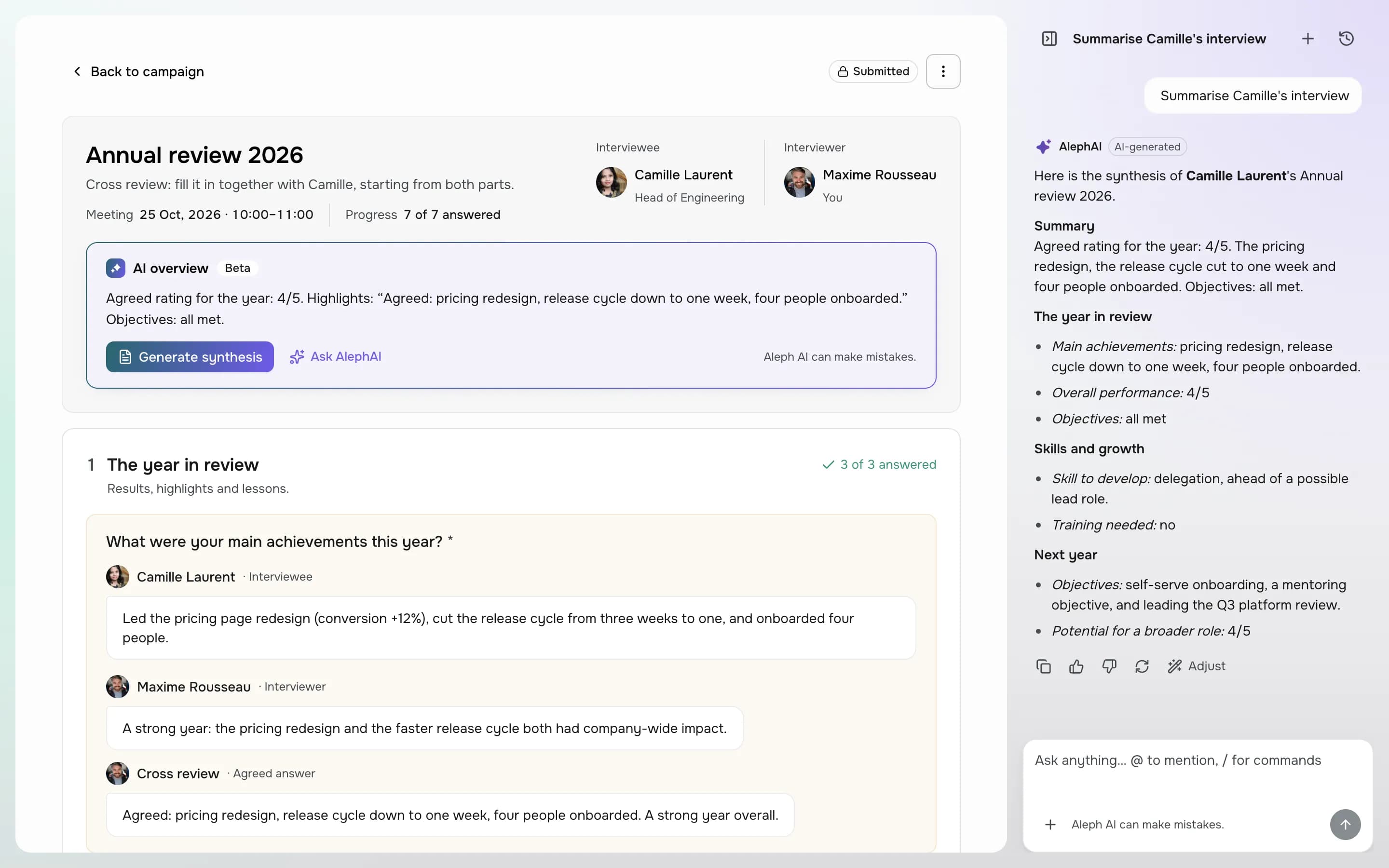
- Write a synthesis of a submitted interview: a summary, the main themes and actions by priority.
- Sum up a team survey or a 360 the same way, and answer questions about a whole campaign with its sources.
- Help write a training module with its quiz, its audio narration and its translation into other languages.
- Fill in a skills review from a note you typed or dictated, each answer marked as AI-filled.
The result isn't just fewer logins. It's one profile every product works from, and AI that saves time inside the work instead of living in yet another tool.
Products in this article
See OpenAleph for yourself
Book a walkthrough built around your team.
More articles
- EngagementFrom answers to actions: running an engagement surveyAn engagement survey is easy to send and hard to use. Anonymity, questions, results and the next round: how to run one people trust and HR can act on.
- GoalsOKR or individual goals: which one, and whenBoth are called objectives, and companies often run one when they need the other. What OKR and individual goals are each for, and how to write key results that measure.
- SkillsHow to build a skills matrix from a competency frameworkA skills matrix usually starts as a spreadsheet and stops being true the day a job changes. Here's how to build one from a framework, review cycles and a talent matrix.