Succession planning for your key positions
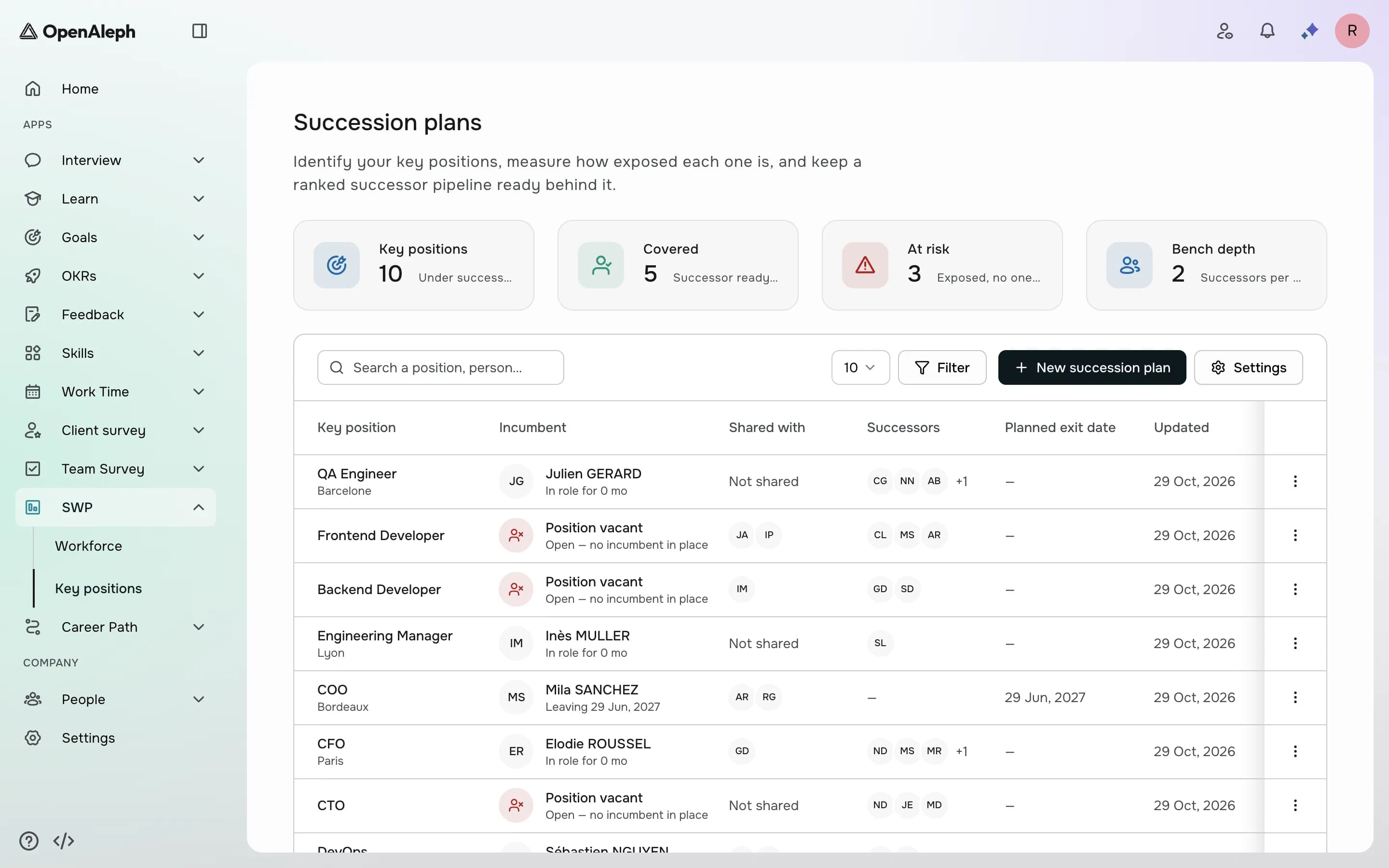
Every company has a few roles it can't leave empty for long: the head of a site, the one engineer who knows the billing system, the manager every client asks for. When that person leaves, the question "who's next?" is answered in a hurry, often by whoever is available. Succession planning is answering it calmly, in advance.
Name your key positions
Don't start with the whole organisation chart. Start with the positions whose sudden vacancy would hurt most, and note who holds each one today and whether an exit is already planned, such as a retirement or a move. In Workforce Planning, in beta, each key position has its holder, its successors and any planned exit.
Agree on what "ready" means
"Ready" means different things to different managers. Write a short readiness scale everyone uses, such as "ready now" and "ready in one to two years", and decide what each level counts towards: a position covered today, a bench for later, or neither. With a shared scale, two managers' succession plans can be compared.
Rank successors, then look for gaps
For each key position, rank the people who could step in, each with their readiness. The overview then shows which positions are covered and which are at risk, and the bench strength behind each one. A position with no successor, or only successors years away, is where development or hiring should start.
Keep it confidential until it's ready
A succession plan names people who may not know they're on it, so treat it carefully. A plan stays private until you share it, with view or edit rights, and can be exported to Excel for a leadership review.
Connect it to your headcount plan
Succession is one half of workforce planning; headcount is the other. Workforce Planning builds a plan for each department or location from your own organisation, sets the headcount each part needs, and shows what is filled and what is still to hire. Seeing both together tells you whether a successor's move would leave a gap of its own.
To get started
- Pick five to ten key positions, not fifty.
- Agree on the readiness scale with the managers who'll use it.
- Name at least two successors per position where you can.
- Review the plan twice a year, and whenever a key person changes role.
- Decide who may see the plan before you share it.
Products in this article
See OpenAleph for yourself
Book a walkthrough built around your team.
More articles
- EngagementFrom answers to actions: running an engagement surveyAn engagement survey is easy to send and hard to use. Anonymity, questions, results and the next round: how to run one people trust and HR can act on.
- GoalsOKR or individual goals: which one, and whenBoth are called objectives, and companies often run one when they need the other. What OKR and individual goals are each for, and how to write key results that measure.
- SkillsHow to build a skills matrix from a competency frameworkA skills matrix usually starts as a spreadsheet and stops being true the day a job changes. Here's how to build one from a framework, review cycles and a talent matrix.